Absence
English Learners Lost Their Attendance Advantage
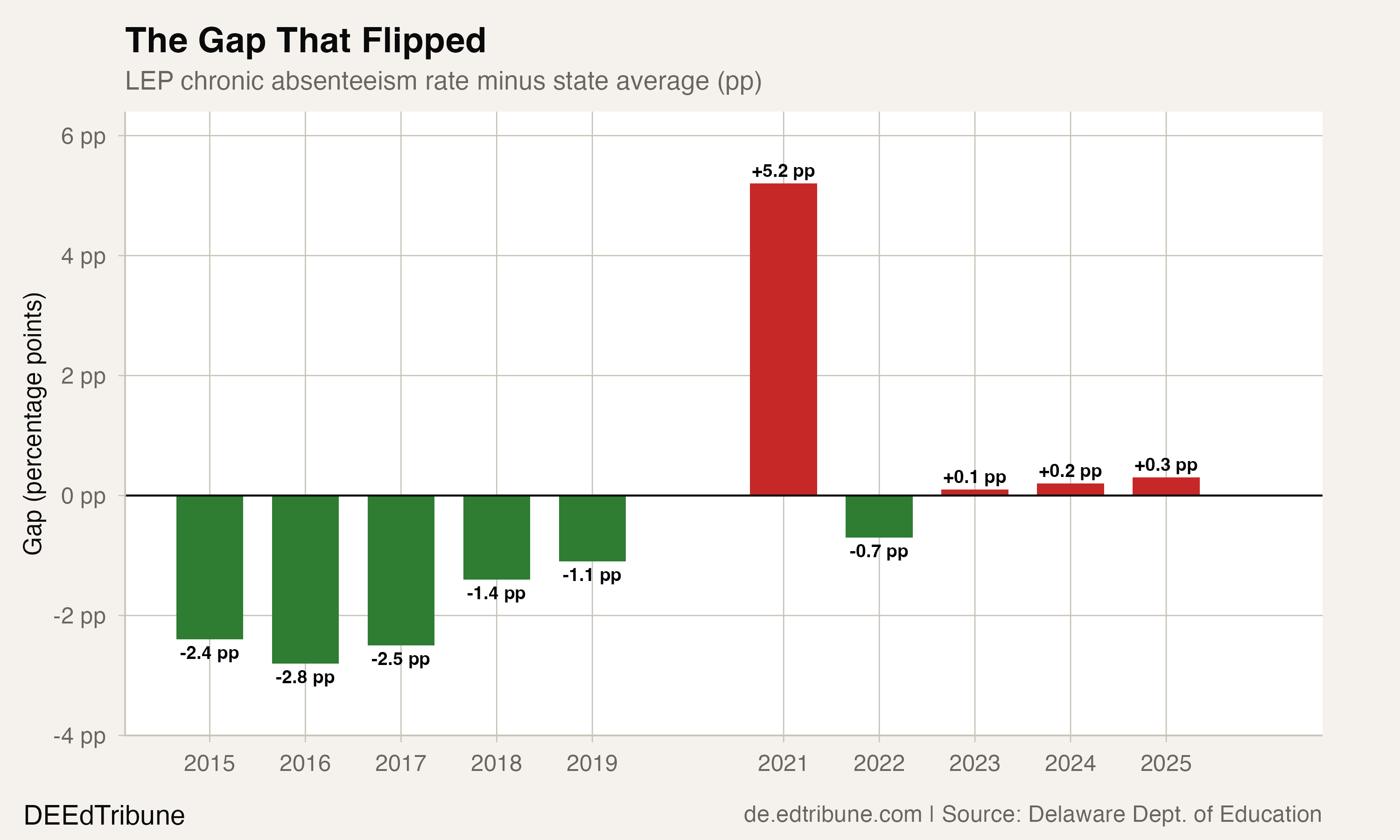
Before COVID, Delaware's English learners were less likely to be chronically absent than average. The gap flipped in 2021, briefly reversed in 2022, and reopened in 2023.
First State Education Coverage, Driven by Data
Education News & Data
Local education reporting from every corner of Delaware, grounded in Delaware Department of Education data.
Smyrna School District stayed below Delaware's chronic absenteeism rate in every available data year since 2015 and ranked lowest among the state's 5,000-plus-student district systems in 2024-25.
The 12th-grade chronic absenteeism rate was 1.4 points below 11th grade in 2025, the fourth such result in five post-2020 reporting years.
Delaware's charter schools post both the lowest and highest chronic absenteeism in the state. Which number you use determines what story you tell.
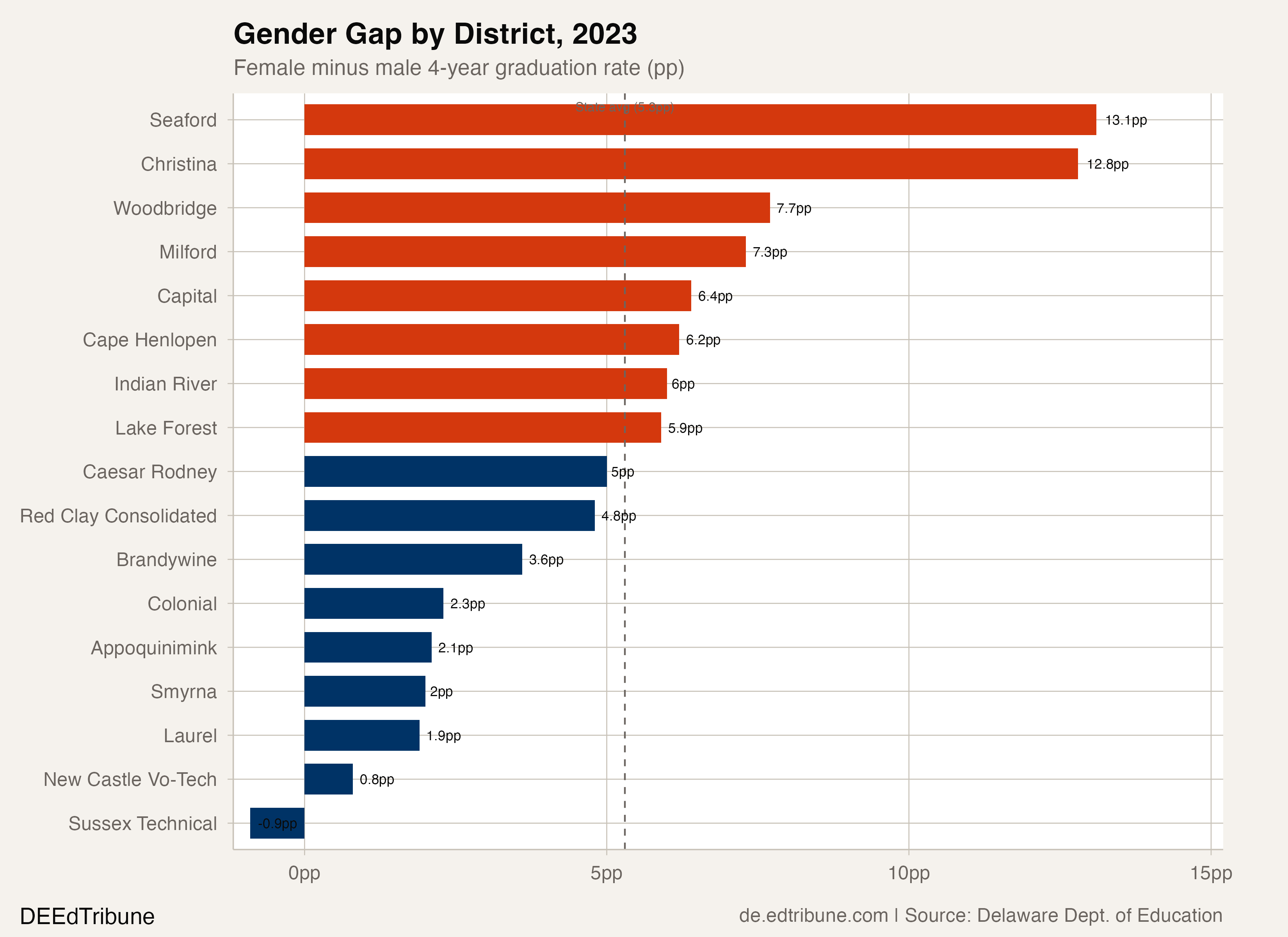
Seaford's graduation rate fell 5.8 points from 2015 to 2023, the steepest Delaware district decline, while its gender gap reached 13.1 points.
Before COVID, Delaware's English learners were less likely to be chronically absent than average. The gap flipped in 2021, briefly reversed in 2022, and reopened in 2023.
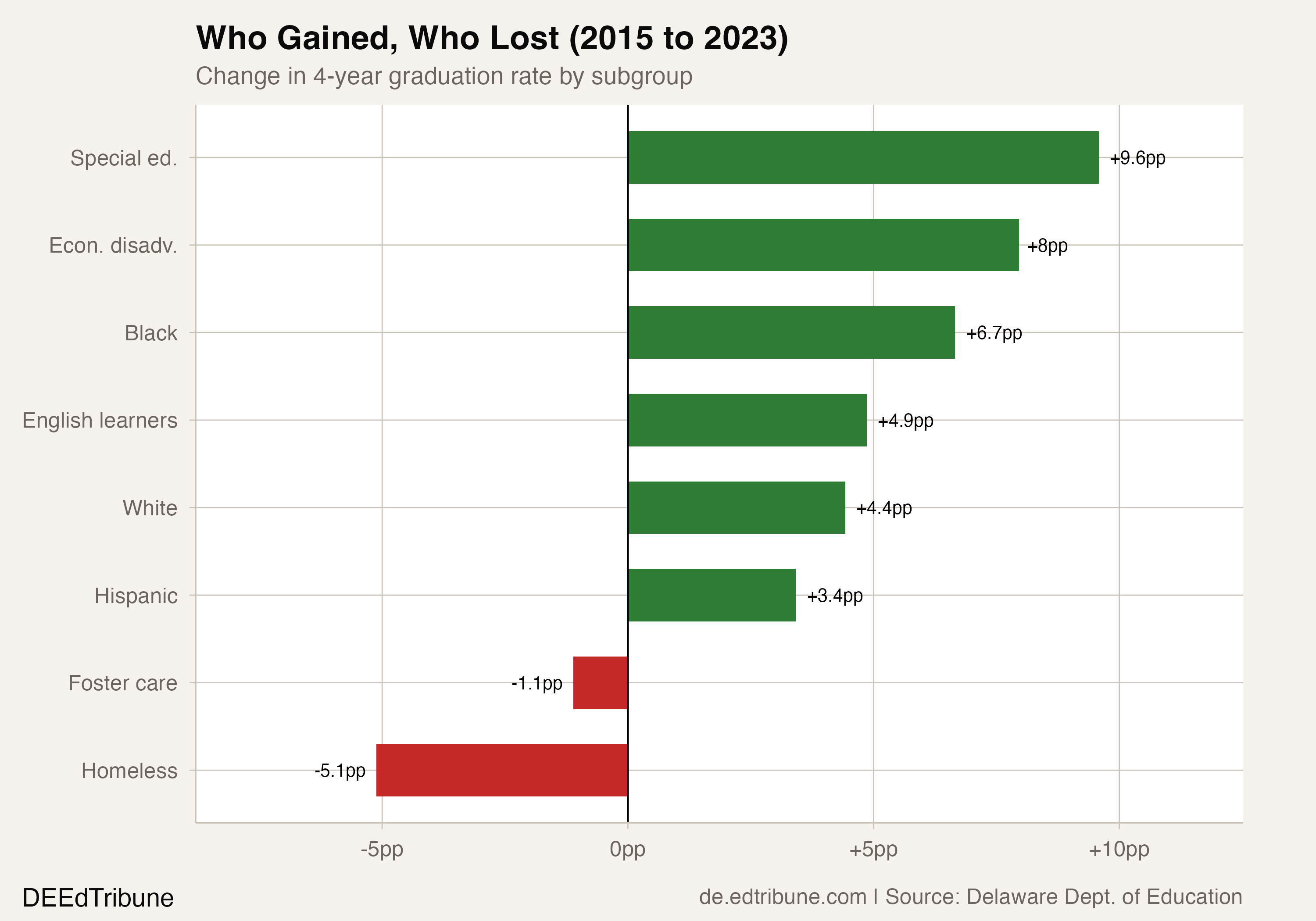
Students in foster care and students who are currently homeless are the only subgroups in Delaware whose graduation rates fell over nine years, even as the state hit an all-time high of 88.9%.
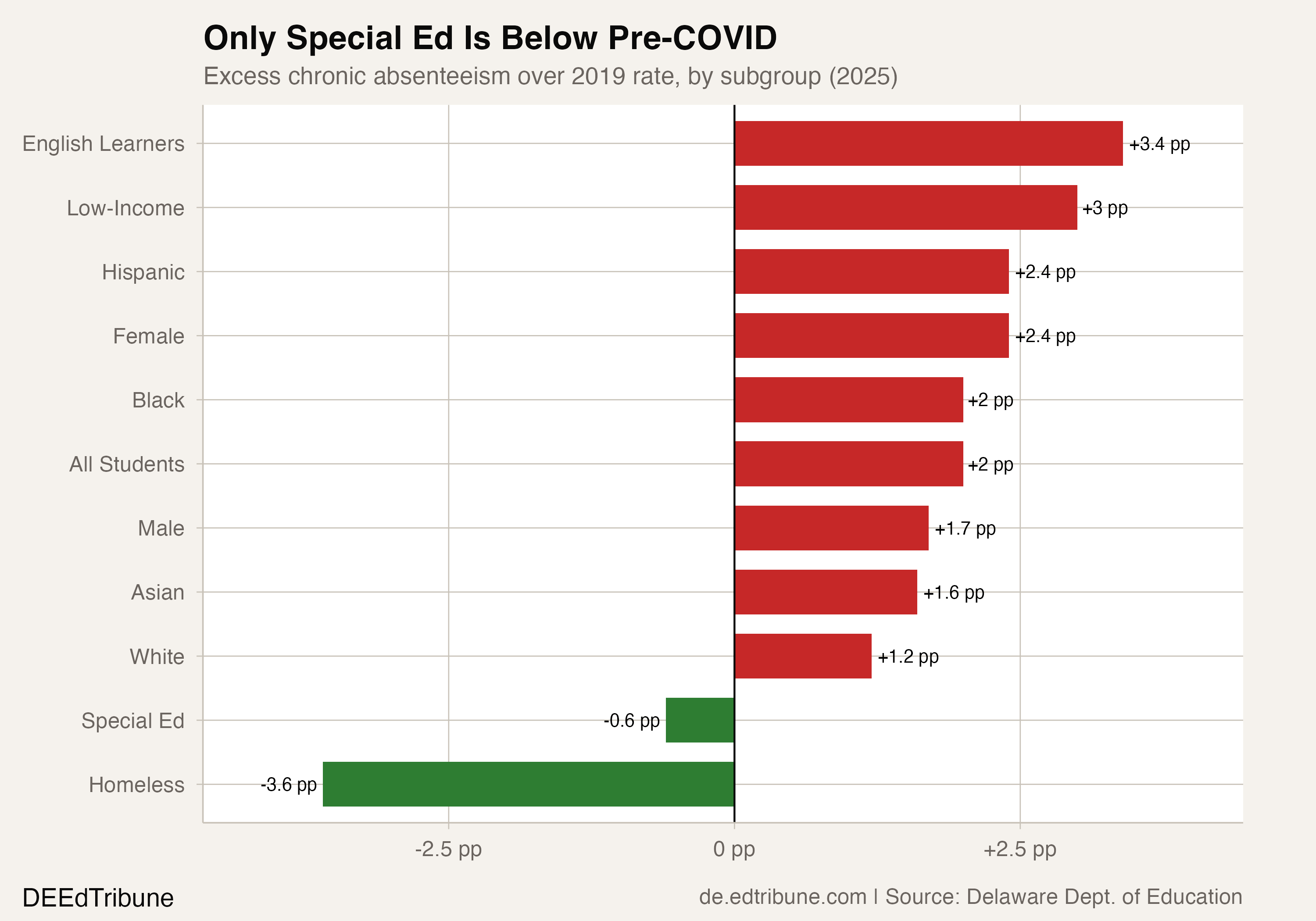
The chronic-absence rate for Delaware students with disabilities fell from 24.1% in 2018-19 to 23.6% in 2024-25, while the all-student rate remained above its 2019 level.
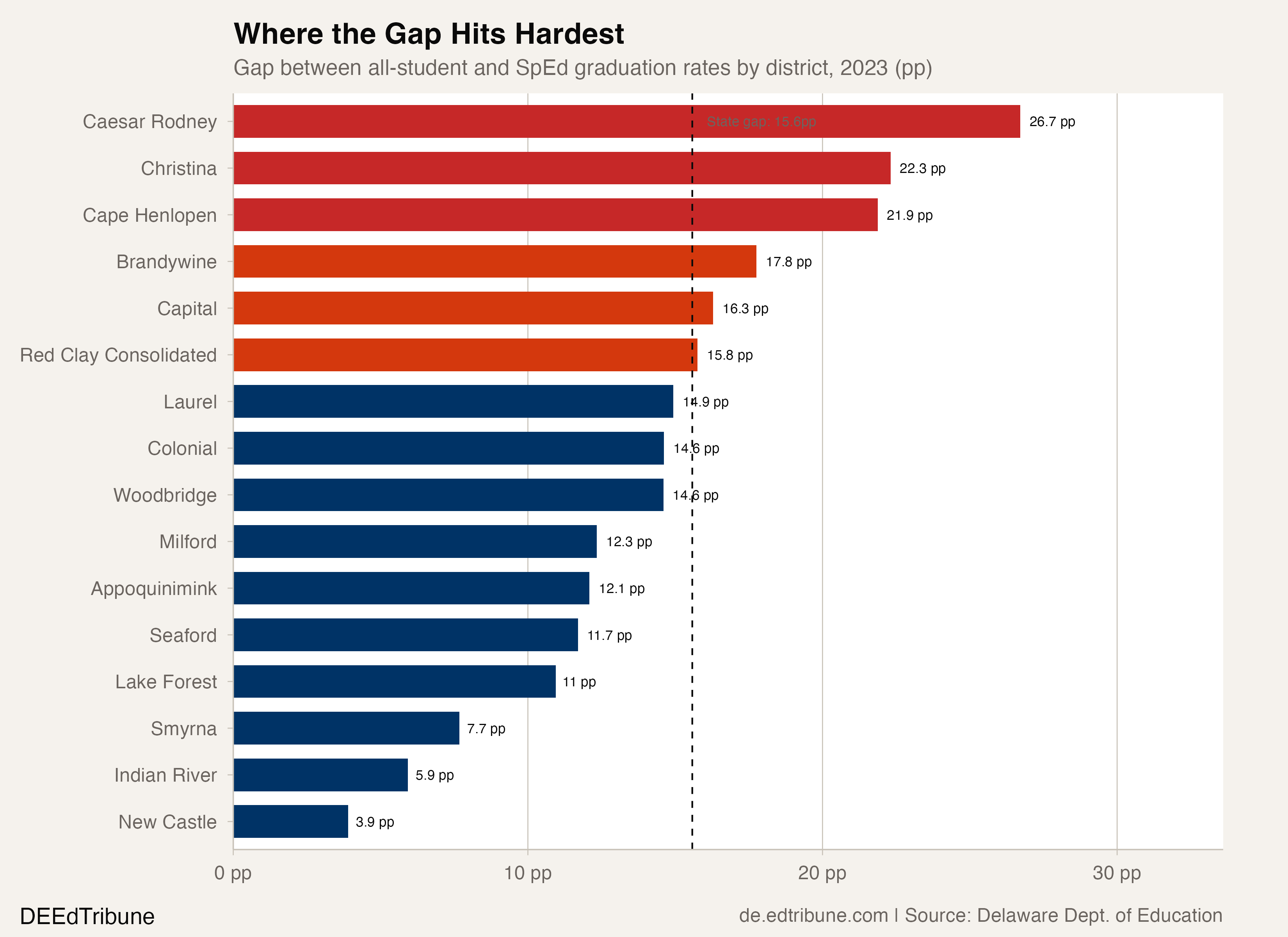
Delaware's SpEd graduation rate gained 9.6 points since 2015, but a 15.6-point gap persists. Christina graduates barely half its SpEd students.
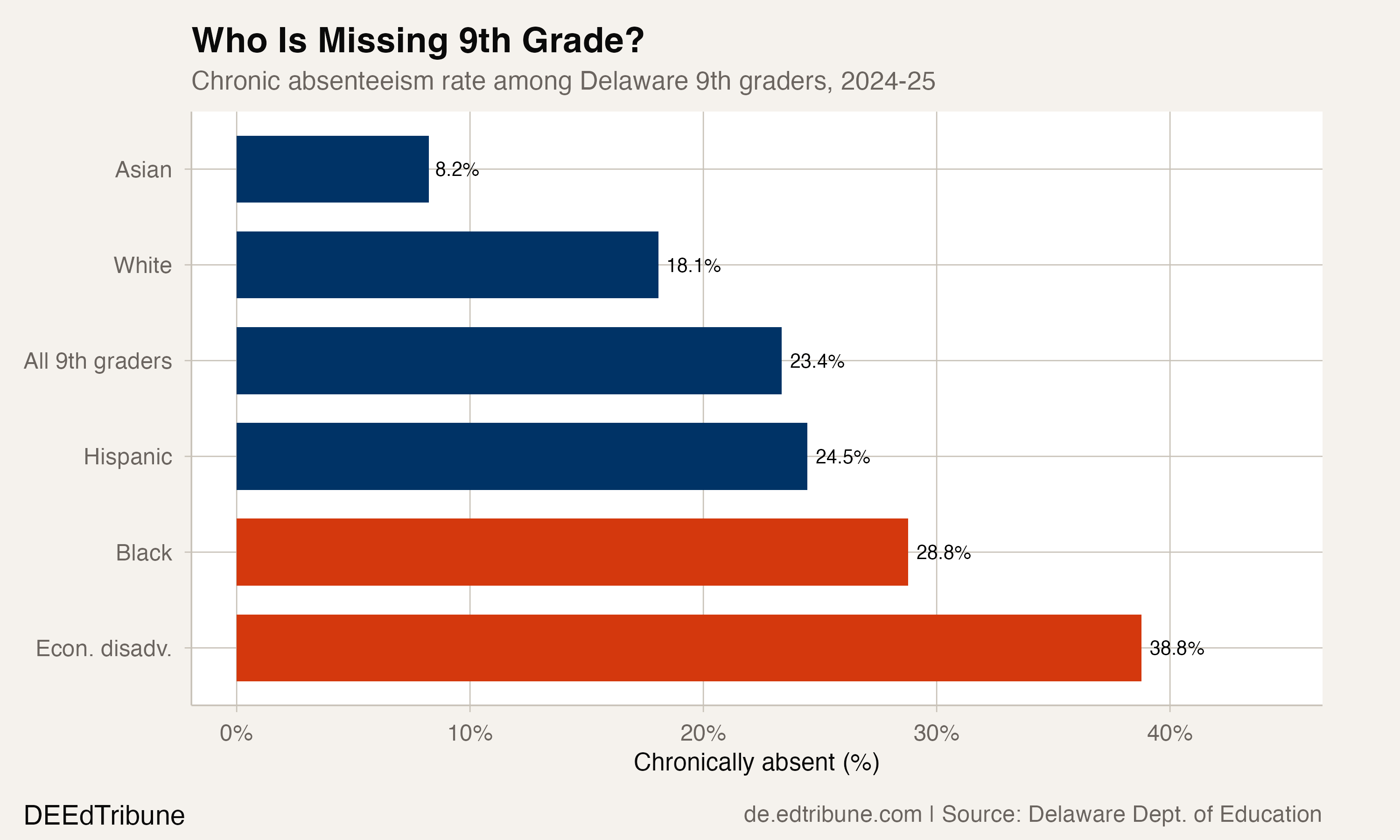
Chronic absenteeism peaks at 23.4% in 9th grade, nearly double elementary rates. Black and low-income freshmen hit hardest at the key dropout predictor.
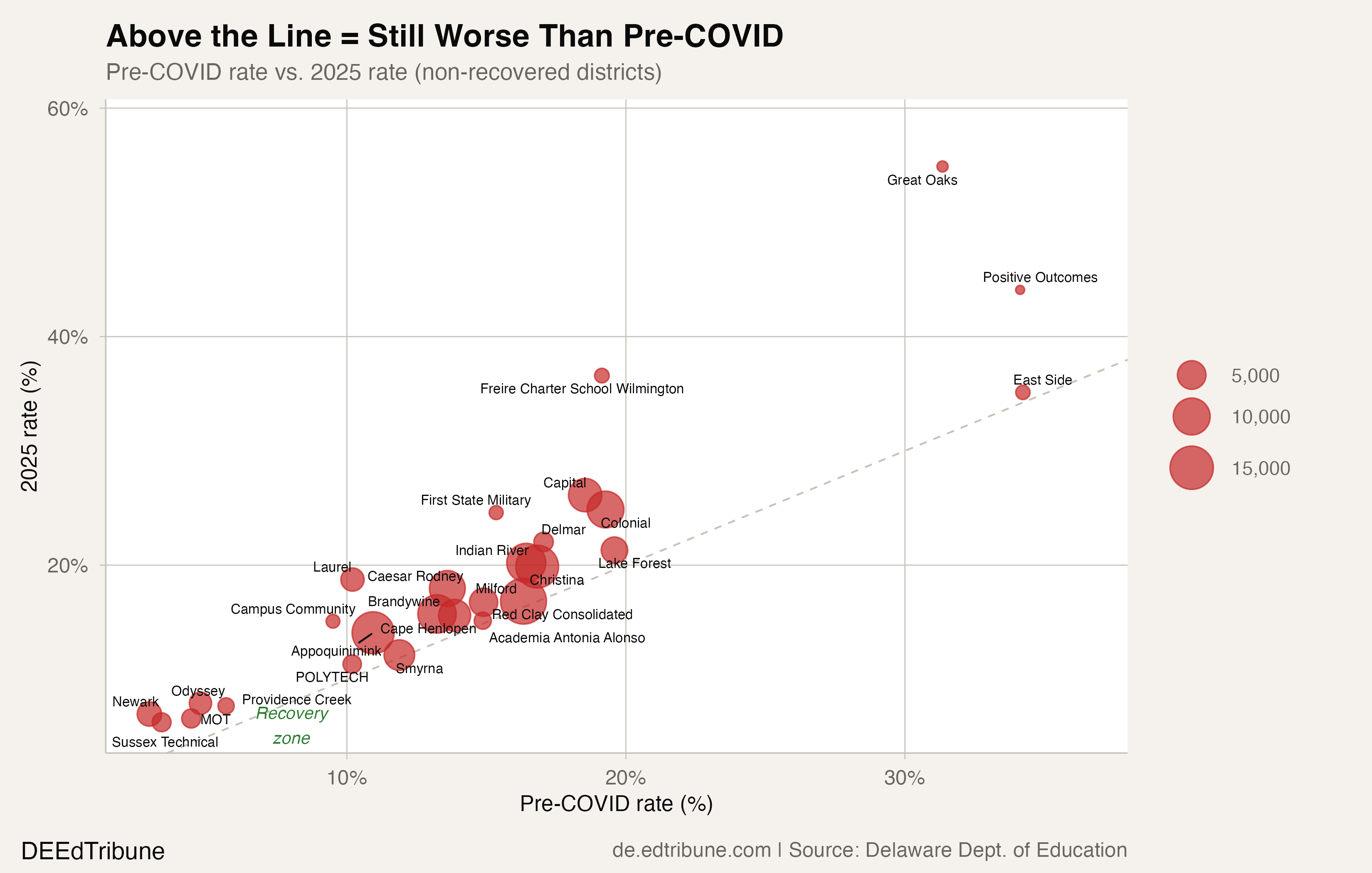
Delaware recovered 81% of its COVID attendance loss statewide, but only 8 of 35 districts have returned to pre-pandemic levels.
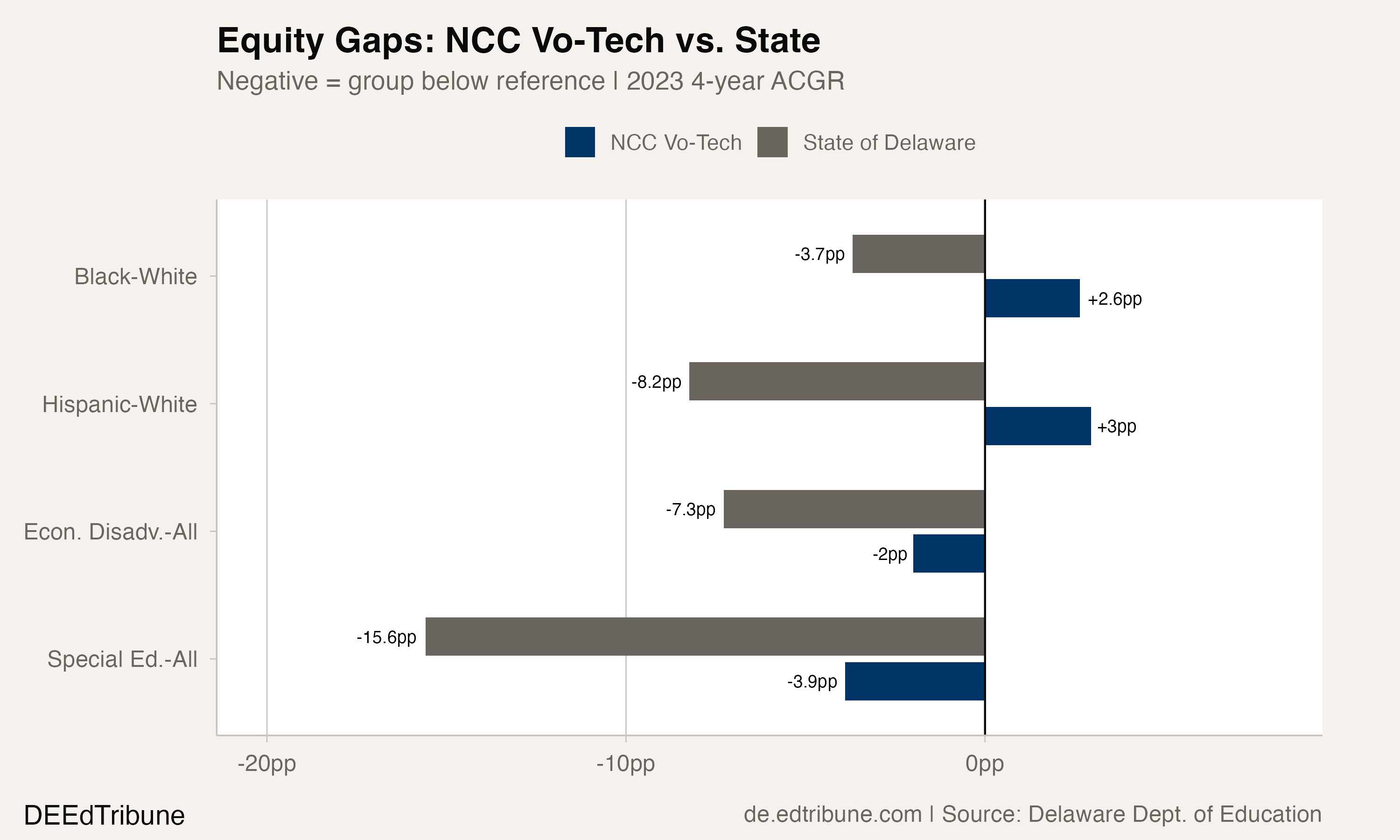
New Castle County Vo-Tech has essentially eliminated the equity gap in graduation rates, with Black students outperforming white peers by 2.6 percentage points.
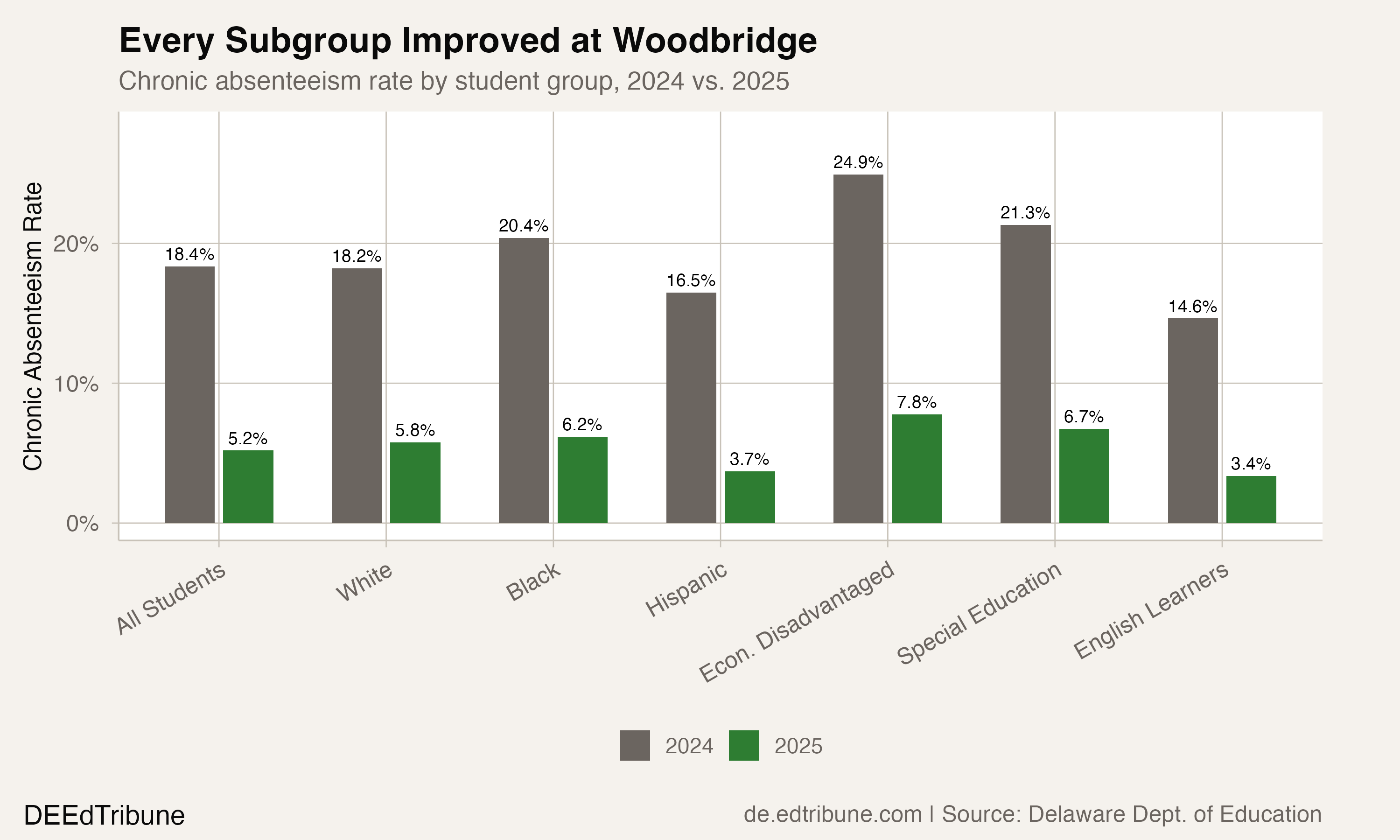
Woodbridge's chronic absenteeism rate fell from 18.4% to 5.2% in 2024-25, the largest single-year improvement among Delaware traditional districts.
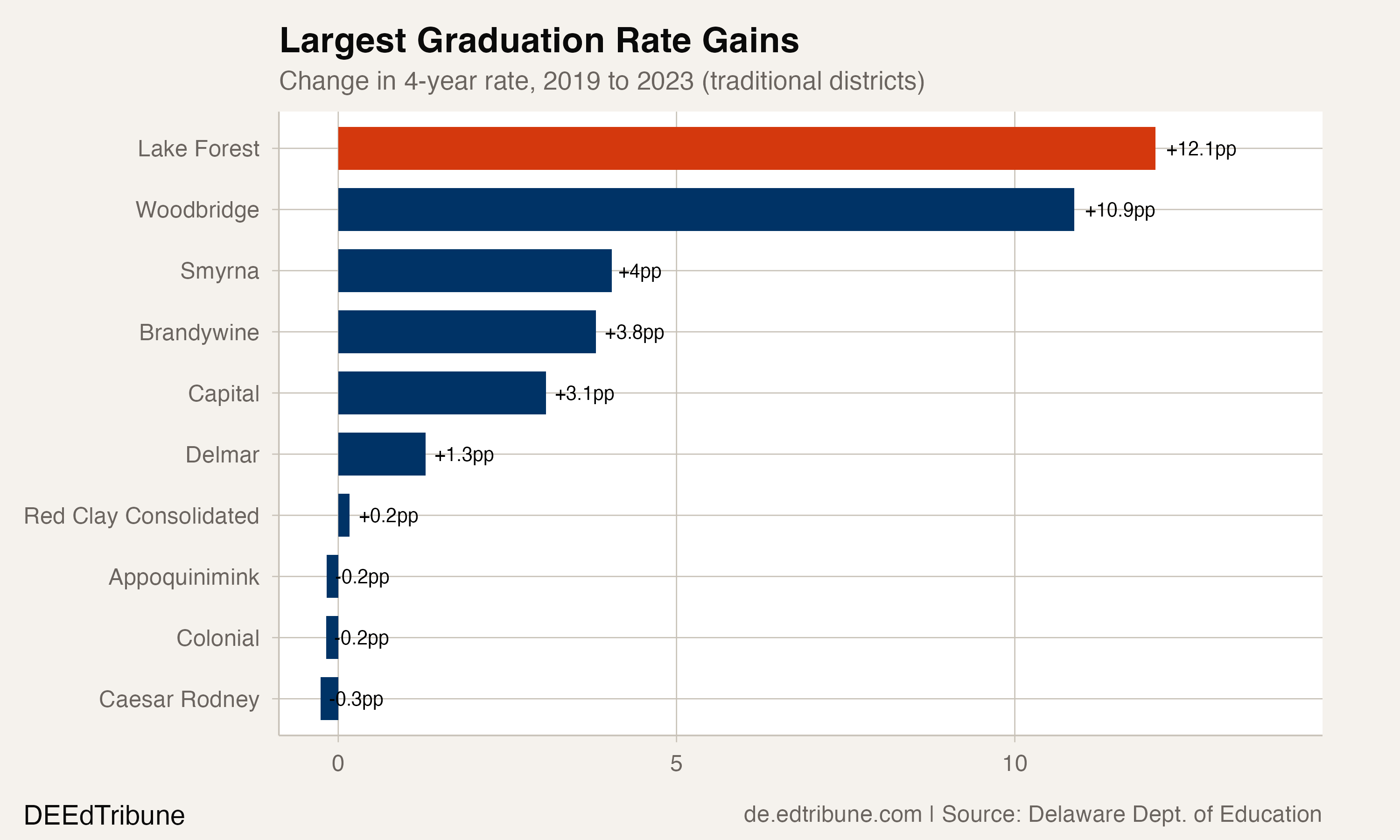
Lake Forest posted Delaware's largest graduation-rate gain: up 12.1 points from its 2019 trough to 90.4%, largest gain among 16 geographic districts.
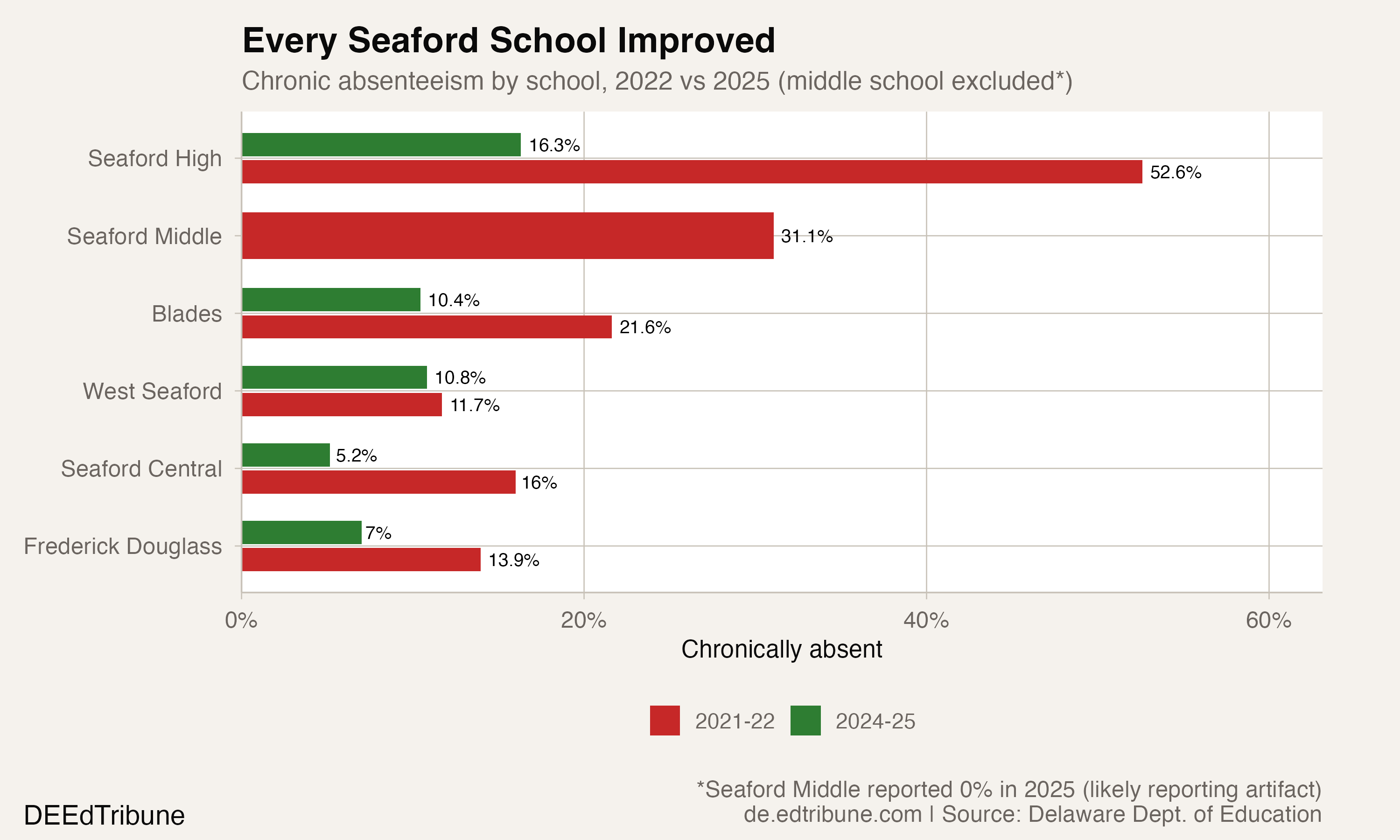
The small Sussex County district went from one of Delaware's worst attendance performers to beating the state average, with 753 fewer students chronically absent.
In Seaford and Christina, male graduation rates sit near 67%, more than 13 percentage points behind female peers. Vo-tech districts show the gap can close.